
Neurology and the Multisensory Impact of Visitor Brochures
Why the sensory richness of brochures creates stronger recall and behavioral follow-through
Visitor brochures, maps, and printed guides continue to influence travel decisions—not by chance, but because they are neurologically aligned with how humans think, feel, and act. While digital media dominates many aspects of life, the science is clear: print stimulates the brain in ways that digital cannot replicate.

When a visitor picks up a brochure, it’s a multisensory experience. There’s the texture of the paper, the movement of unfolding a map, the sound of a page turning, and even the subtle scent of fresh print. These sensory cues are not incidental—they activate the brain in meaningful ways. This process, known as haptic memory, helps embed the information more deeply and enduringly.
And it’s measurable. A landmark study by Millward Brown for the Centre for Experimental Consumer Psychology used functional MRI (fMRI) brain scans—which measure brain activity by tracking blood flow—to compare the effects of physical and digital media.
It found that paper-based materials caused more activity in areas of the brain associated with emotional engagement and memory. In particular, print was shown to trigger greater “emotional resonance” and “internalisation” of content than digital. The result: print feels more real, is more memorable, and builds a stronger emotional response.
When a visitor picks up a brochure, their brain begins imagining the experience. Neurologically, this is a moment of commitment. They aren’t just reading about a destination—they’re picturing themselves there.
Print encourages this kind of mental simulation in a way that digital rarely does. The act of touch matters. Holding a brochure increases perceived ownership, which has been shown to increase the likelihood of follow-through. Simply put, if I pick it up, I’m more likely to do it.
Trust Is Tangible: The Brain Trusts What the Hands Choose
In an age of misinformation and content overload, trust is a decisive factor in how people choose where to go and what to do. Printed brochures are inherently trusted because they are real, curated, and cannot be easily manipulated.
Neurologically, trust isn’t just a feeling—it’s a response rooted in how the brain processes physical cues. When something is tangible, selected by hand, and visually rich, it activates deeper cognitive pathways associated with judgment, memory, and emotional assessment. Our brains are wired to treat physical objects—like brochures—as more permanent, reliable, and worth paying attention to.
According to the 2025 Visitor International survey:
- 98% of visitors consider brochures to be trustworthy sources of information.
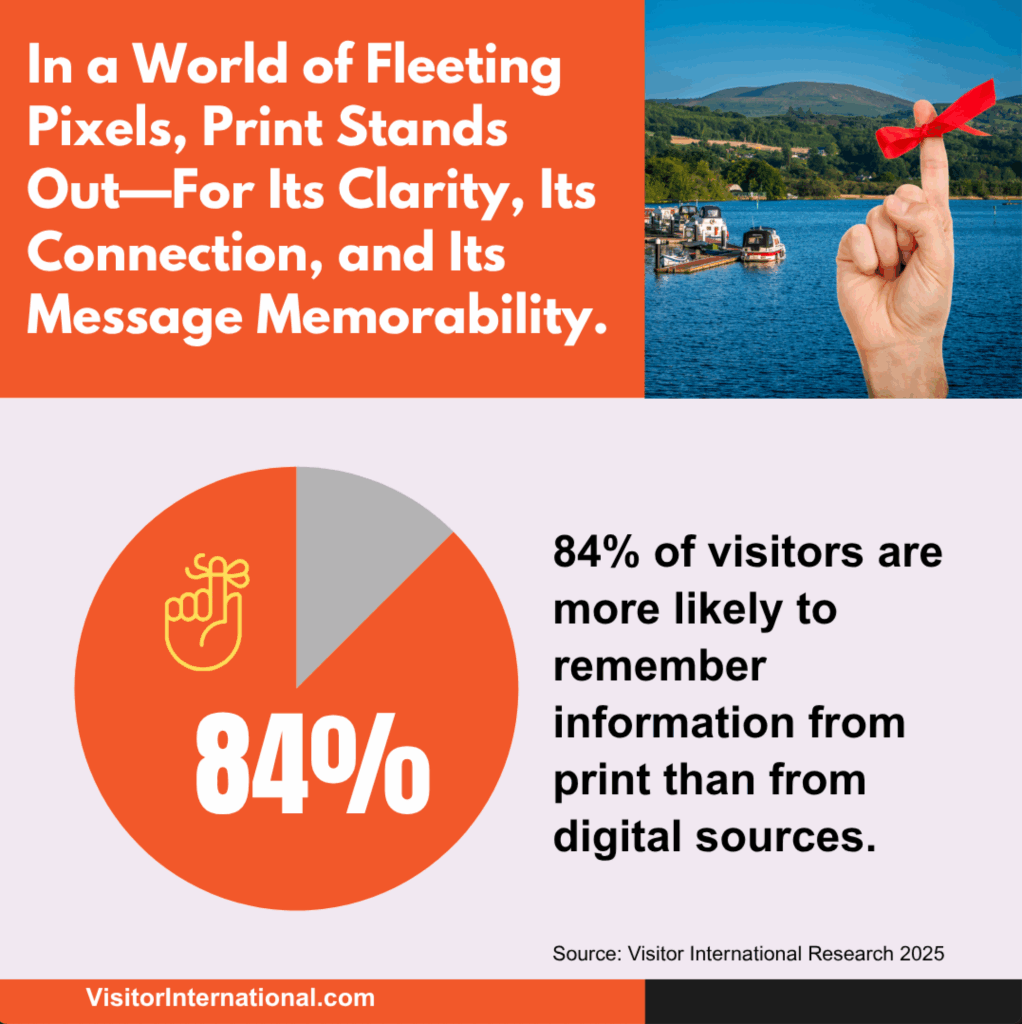
- 84% say they’re more likely to remember what they read in print than in digital formats.
- 88% prefer to pick up a printed guide rather than download one.
- Print is seen as more deliberate, reliable, and credible than digital alone
These aren’t just preferences. They’re indicators of confidence—and they’re directly linked to the fact that the visitor has chosen the brochure themselves. This act of selection is not passive; it reflects interest, relevance, and intent. The selected brochure becomes their chosen guide—and that choice drives both trust and retention.
This trust frequently translates into more real-world actions—visits, bookings, and purchases.
The Brain Loves Structure —And Brochures Provide It
The structure of information also plays a part. A brochure or map offers a physical layout—pages, folds, and spatial cues that allow the brain to form a mental map. This helps visitors not only navigate geography but plan experiences.

Unlike digital interfaces that require scrolling and swiping, a paper guide shows everything at once, giving the brain a clearer sense of orientation and possibility.
This kind of spatial understanding enhances both confidence and commitment. Visitors feel grounded, prepared—and more likely to follow through on their plans.
Brochures are not only more memorable—they are ever-present. They don’t vanish in a browser tab. They’re held, carried, and referred back to—frequently. When something is chosen by hand, it stays in mind.
Conclusion
All of this makes brochures uniquely powerful. They are not passive pieces of paper. They are opt-in, emotionally resonant, sensory-rich, and trusted tools that support memory, guide discovery, and lead to action.
From a neuroscientific perspective, brochures activate more parts of the brain. From a behavioral standpoint, they influence more visitor decisions. And from a practical angle, they work—because they align with the way human beings are wired.
Ultimately, visitor brochures work best because the brain responds to what’s tangible, exciting, chosen, connected, and trusted.

The 25 Laws of Visitor Marketing — Make Them Work for You
Want to reach visitors more effectively? These 25 Laws are drawn from decades of experience guiding travelers around the globe. In an AI-driven world, where search visibility is vanishing, they’ll help you sharpen your strategy—and stop you wasting time and budget.