
Tourism and the Impact of Distance Decay
Why promoting nearby beats shouting far for most businesses—and how to make your reach matter
Some truths in tourism are hard-earned. Others are quietly obvious—but underused.
This one is both: The further someone is from your business, the less likely they are to act on your message (with some exceptions).
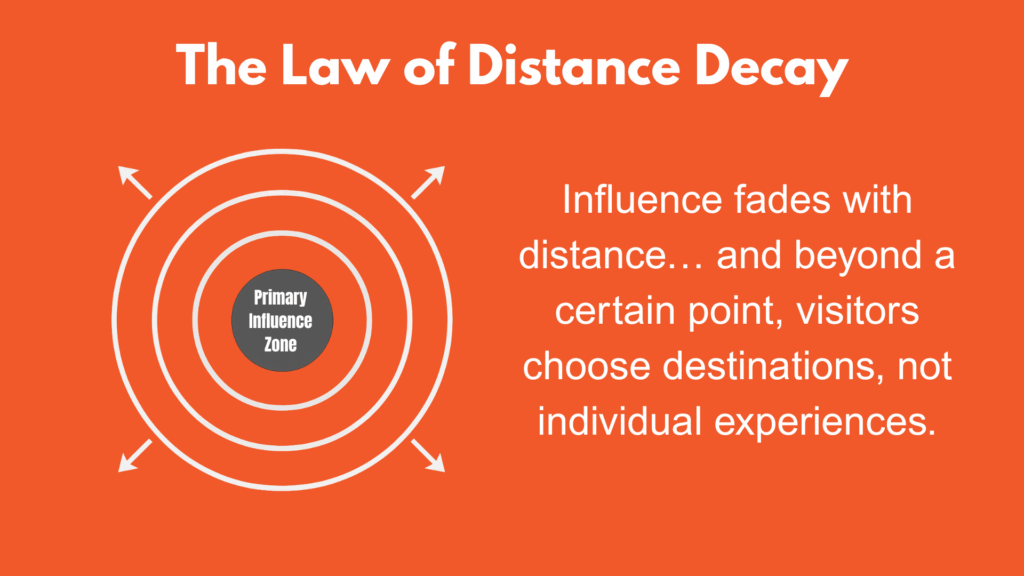
In behavioural economics, it’s known as the Law of Distance Decay. And for tourism providers, it may be one of the most important principles to understand and apply—especially in a world of fragmented attention and shrinking discoverability.
Whether you’re running a food tour, a heritage site, a wildlife park, or a visitor center, proximity matters. It shapes intention, fuels spontaneity, and determines—more than most realise—whether a visitor will walk through your door.
But proximity isn’t just about physical distance—it’s about time, effort, and ease of access. A city that’s further away geographically may actually feel closer if there’s a direct motorway, good public transport, or a smooth travel route. These factors all shape what feels “nearby” to a visitor—and what feels like too much of a stretch.
Brochures, maps, and in-destination screens play a critical role 'nearby'. They don’t just tell visitors what’s available—they meet people at the point of decision when they are nearby and invite them to act now, not later.
But there are exceptions to Distance Decay. Some experiences are so iconic, unmissable, or central to a trip that they draw business from further afield—think major landmarks or itinerary anchors that visitors plan around. Others are unique adventures that appeal to niche or highly motivated travelers, such as specialist tours, rare wildlife encounters, or one-of-a-kind cultural experiences. We explore these exceptions in more detail below.
Nearby Isn’t Just Closer—It Converts Better
Tourism marketers often loves scale. The further your message travels, the better, right?
Not quite, if its at a cost.
While broad awareness has its place, the real opportunity for attractions and experiences lies close to home—in the short-trip distance and time radius where visitors are already staying, exploring, or pausing with some time to spare.
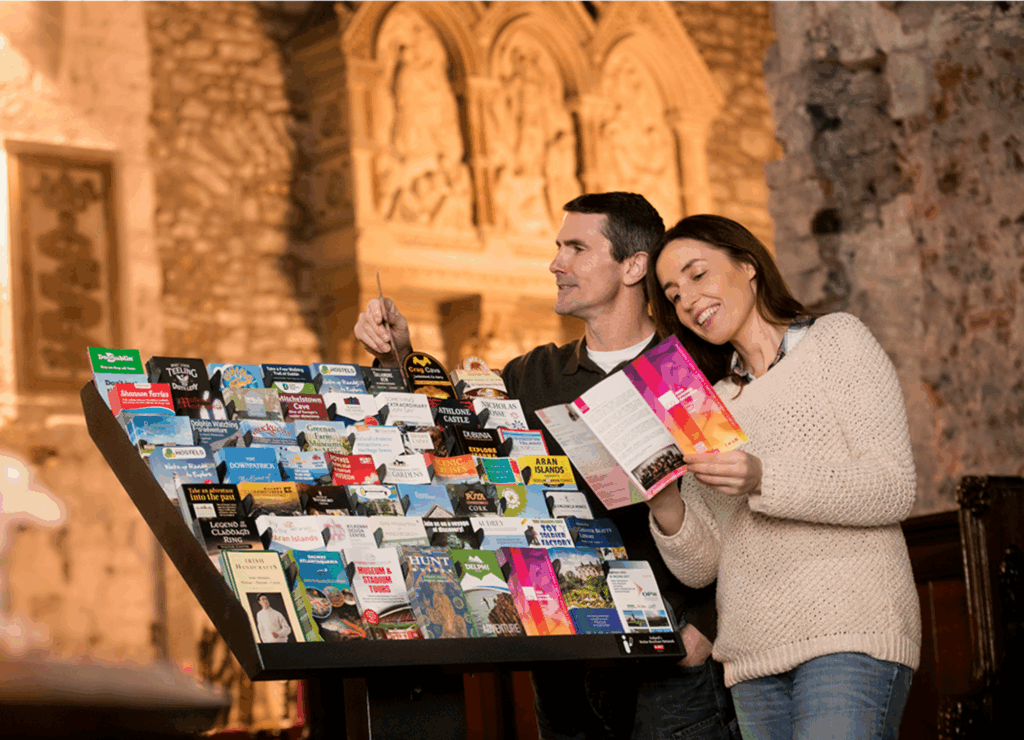
This is the zone where decisions are still being made.
Visitors may not have fixed plans yet, and they’re ready to act on the right idea.
They’re in discovery mode—curious, open, and looking for something worthwhile to do.
And that’s exactly where brochures and visitor guides excel.
Unlike digital ads on mobile devices that pass unnoticed, brochures are actively chosen. They sit in hands, not just inboxes. They present themselves on brochure displays and countertops, get folded into pockets, and travel in bags. When someone picks up a brochure, they’re expressing interest—and opening themselves to influence.
Placed in nearby high-traffic venues like hotels, attractions, and transport hubs, brochures don't just inform—they intercept. They catch attention while people are looking for things to do, places to visit, and reasons to say “let’s go there.”
That visibility, at the right time and in the right place, turns into real results.
When you're close, you're considered.
And when you're visible and of interest, you're chosen.
The Law of Diminishing Promotional Returns
As you move further from your location, the likelihood of influencing a visit drops.
Not because your offer is weak, but because the visitor’s reality shifts.
- They would have to rearrange plans.
- They may have already filled their destination itinerary.
- They’re not emotionally invested in “somewhere else.”
- And often, it’s simply not worth the trip for one experience.
That’s distance decay in action.
It doesn’t mean you shouldn’t promote further afield—but it does mean you should change how you do it.
When your message travels beyond your immediate sphere, it needs context, support, and relevance to cut through.
Promoting Beyond the Local Zone? Travel in Good Company
When you're promoting outside your immediate area, your business is rarely the sole reason someone acts. Visitors don’t typically travel to find a single attraction or experience—they travel to explore destinations, discover stories, and experience something bigger than one listing.
Which is why your message, when it ventures further out, is far more effective when it rides alongside something broader. That might be a county, a region, a trail, a festival, or a trusted visitor guide presenting a destination or region. It might be a themed itinerary or a curated collection of attractions that includes your business as one of many highlights.
When you appear within the context of a place or experience that visitors are already drawn to, you gain relevance by association. It’s not just your name they see—it’s your name in the right setting, at the right time, in the right company.
And if you're investing in digital further afield, optimise for discovery—not just reach. It’s not enough to broadcast your message. You need to appear where people are already looking for destination inspiration —whether that’s maps, articles, video content, or curated platforms.
You’re not the destination.
But you can be one of the reasons they choose it.
The Smart Exception: Access Gateways
There is, however, a powerful exception to the law of distance decay—access gateways.

Airports, ferry terminals, train stations, and other points of arrival are where the rules bend. Visitors here are on the move, often freshly arrived and ready to explore. They’re in a highly intentional state, often Free Independent Travelers (F.I.T.s) with the freedom and appetite to shape their itinerary on the fly.
In these locations, brochures come into their own.
Picked up at the start of a trip, a brochure can guide not just a single decision—but an entire visit. It can introduce, influence, and stay visible throughout the journey. A well-positioned brochure at a gateway doesn't just catch the eye—it helps shape the route.
It’s the one place where distance doesn’t dilute the message—because intent is already strong, and discovery is just beginning.
Nearby Visitors Become Repeat Visitors
Another reason to focus on nearby? Repetition.
When your business is visible to those already close—staying in the area, living nearby, or returning regularly—you’re not just winning visits. You’re building memory.
A couple staying 20 minutes away might come back again on their next trip.
A family from a neighbouring town might return with friends.
A local visitor might recommend your business—or bring someone new next time.
Every nearby guest is a potential advocate.
And proximity makes you easier to remember—and easier to return to.
The Strategy: Think in Circles

Tourism success isn’t linear—it’s radial.
It begins with presence.
Ask yourself: “Where are people when they’re most likely to choose me?”
Then build outward from there.
Saturate your close radius first. Make sure you’re visible where visitors are already spending time—hotels, attractions, visitor centers, transport hubs. Strengthen your presence with brochures, flyers, and maps that don’t just sit—they speak.
And work with professional brochure distributors who already have networks of serviced display locations and the frequency to keep your materials visible and topped up. Their reach, relationships, and logistical efficiency are hard to replicate—and make all the difference when consistency matters.
Partner with nearby experiences to reinforce your collective appeal. And once you’ve claimed that space, extend your reach through regional collaborations, destination storytelling, and smart placement at key arrival points.
You don’t need to be everywhere.
You need to be where it counts.
Conclusion: Be Discoverable Where Decisions—And Revisit Plans—Are Made
Distance decay isn’t just a theory—it’s a pattern.
It plays out every day as visitors make choices in the moment.
And it echoes over time—because visitors who discover you nearby are also the ones most likely to remember, revisit, and recommend.
So if you're wondering where to focus, start close.
Brochures, in particular, remain one of the most effective tools you have—intercepting attention when it matters most, guiding visitors in the moment, and staying with them as they explore.
Promoting near isn’t just cheaper. It’s smarter. It’s stronger. And it lasts longer.
Be there when the moment strikes.
Be visible when plans are still unfolding.
And if you’re reaching further—travel in good company, and be part of something bigger.
Because in tourism, proximity isn’t everything.
But it’s where business is best won.
Notable Exceptions to Distance Decay
While distance decay strongly shapes most travel behavior, there are certain situations where its effect is less pronounced or even outweighed by other factors. Recognizing these exceptions helps refine marketing strategy.
| Exception Type | Why Distance Decay Plays a Lesser Role | Practical Example/Advice |
|---|---|---|
| Unique, Iconic, or ‘Bucket List’ Attractions | Visitors are willing to travel much farther for once-in-a-lifetime, globally unique sites. | The Cliffs of Moher, Disneyland, Machu Picchu: Focus some marketing on long-distance travelers. |
| Specialized or Niche Experiences | Highly targeted offerings (e.g., adventure, wildlife, luxury) draw dedicated guests willing to travel. | Eco tours, destination weddings, or major sporting events often see most guests from afar. |
| Urban Landmark Venues | Large cities with great transport attract locals, regionals, nationals, and international guests alike. | Urban museums, stadiums, or events benefit from balanced marketing—local and remote. |
| Non-repeat Models | Some experiences are designed for rare or single visits, reducing the value of repeat local business. | Iconic castles, theme parks, or exclusive events: focus on first-time visitors too. |
Key Point to Note:
Distance decay is a powerful guideline that explains most travel behavior—but understanding and strategically accommodating these exceptions will help maximize your results. Use your actual visitor data to calibrate how much weight to place on distance versus other appeal factors.