For Visitor Information, Paper, Not Digital, Is the Greener Choice. Let's Compare.
New guides from Visitor International compare print against digital, from raw material to end of life
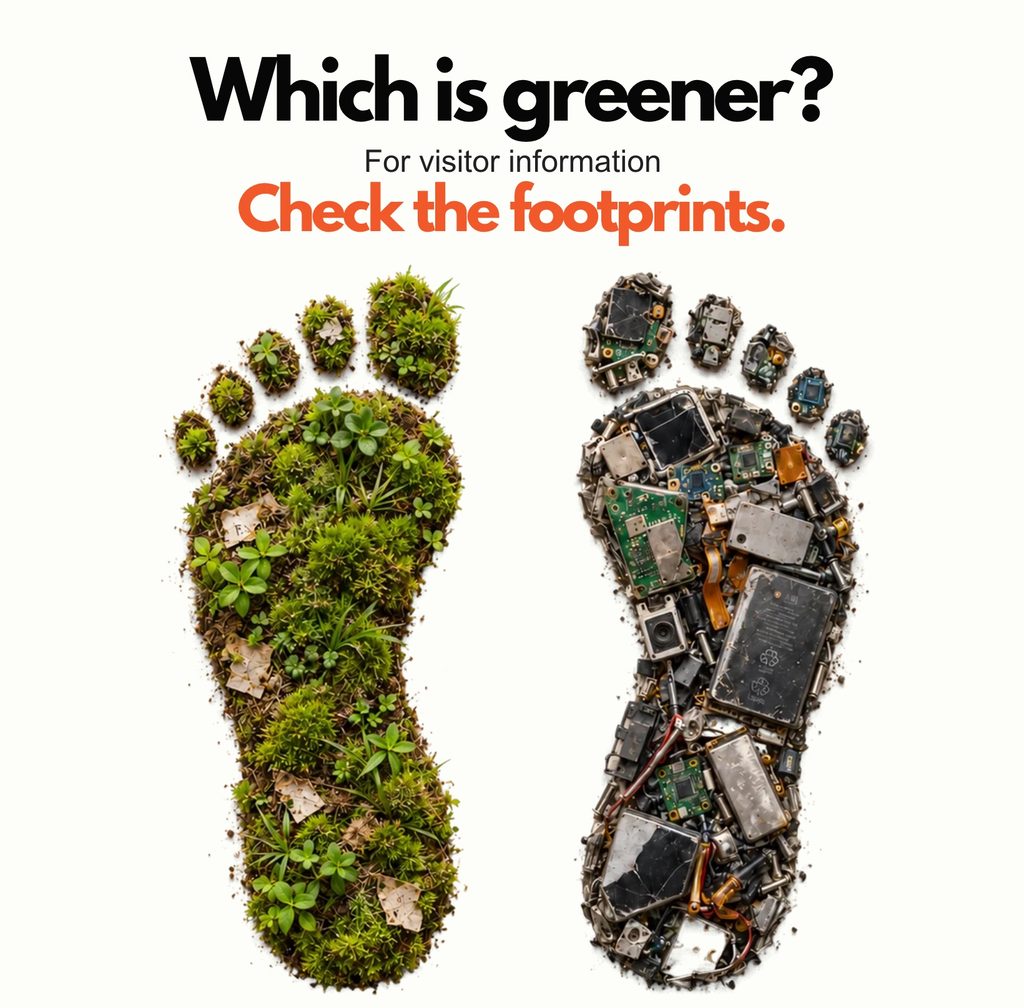
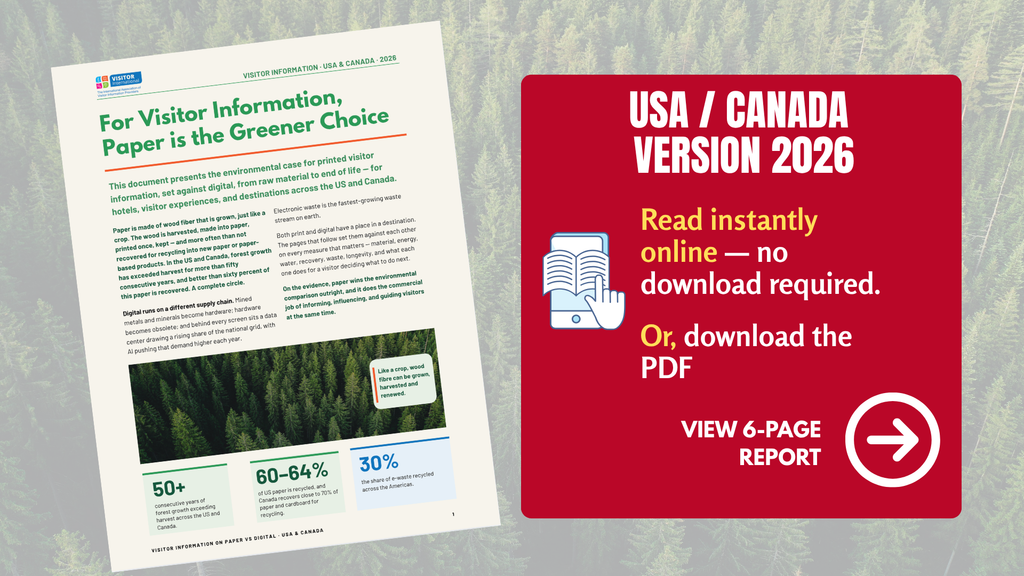
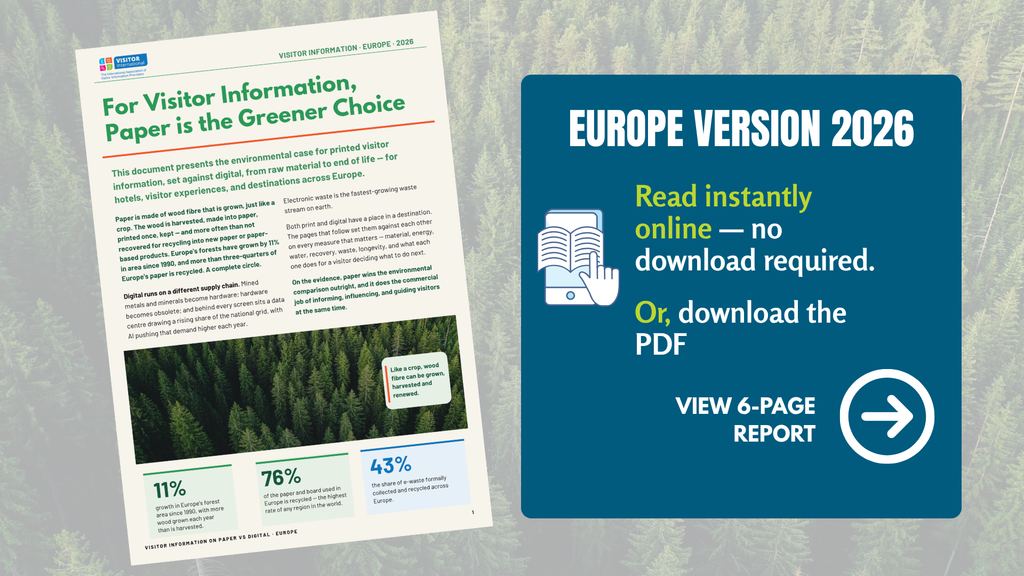
Paper is the greener choice for visitor information, and the evidence is clear. Visitor International's two new six-page guides, one for Europe and one for the US and Canada (both downloadable below), compare print and digital on fifteen measures, from the material each is made of to what happens at the end of its life. On the evidence, paper wins the environmental comparison, and it does the commercial job of guiding visitors at the same time.
Grown Like a Crop
Paper starts with wood fiber that is grown, harvested and renewed. Europe's forest area has grown by 11% since 1990, with more wood grown each year than is harvested. Across the US and Canada, forest growth has exceeded harvest for more than 50 consecutive years.
Digital runs on mined metals, plastics and rare earth elements, materials that are extracted once and used up.
Zero Energy in the Visitor's Hands
Once printed, a brochure, map or guide needs no power to do its job. Its energy bill is finished. Every digital interaction draws energy at five points: the visitor's device, their connection, the mobile network, cloud storage and the data centers behind them. EU data centers used around 70 TWh of electricity in 2024, projected to reach around 115 TWh by 2030. US data centers used about 4.4% of the nation's electricity in 2023, projected to reach 6.7% to 12% by 2028. Globally, demand is set to roughly double by 2030, driven by AI, and data centers also draw large volumes of water for cooling.
Among the World's Most Recycled Materials
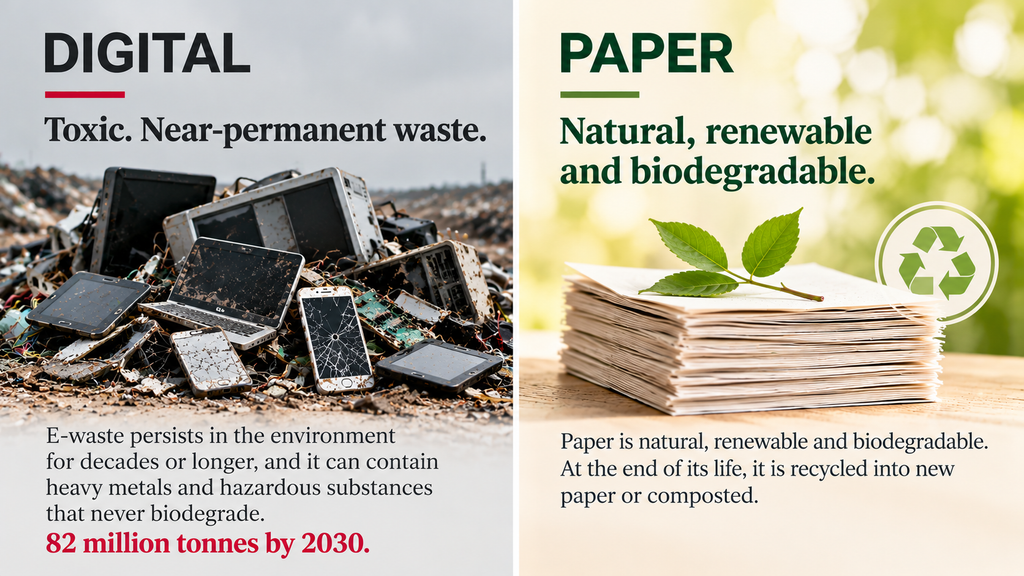
Europe recycles 76.4% of the paper and board it uses, the highest rate of any region in the world. In the US, 60–64% of paper and 69–74% of cardboard is recycled, and Canada recovers close to 70%. At the end of its life, paper is natural and biodegradable.
Electronic waste is the fastest-growing waste stream on earth, on course for 82 million tonnes by 2030. Only 42.8% is formally recycled in Europe, which generates more e-waste per person than any other region, and around 30% across the Americas.
Built to Last, Ready in an Instant
A printed guide works as well on its last day as on its first, with no battery, signal, app or login. It gets guests looking up and out at the destination and can shape an entire visit. At the end, paper has four clean endings: keep it, pass it on, recycle it or compost it. Digital depends on continual replacement of phones, screens, batteries and servers.
Digital comes into its own once a visitor knows what they are looking for, often after first discovering it in print. The two work best together, with print leading the way.
The Verdict
Paper arrives renewable, works on zero energy in the visitor's hands and is among the world's most recycled materials. It sends visitors out to the attractions and independent businesses that depend on being found, supporting spend in the local tourism economy.
For visitor information, paper is the greener choice.
Download the guides below and share them with colleagues, partners and decision-makers in your destination:
- For Visitor Information, Paper Is the Greener Choice: Europe Download here or below.
- For Visitor Information, Paper Is the Greener Choice: USA & Canada